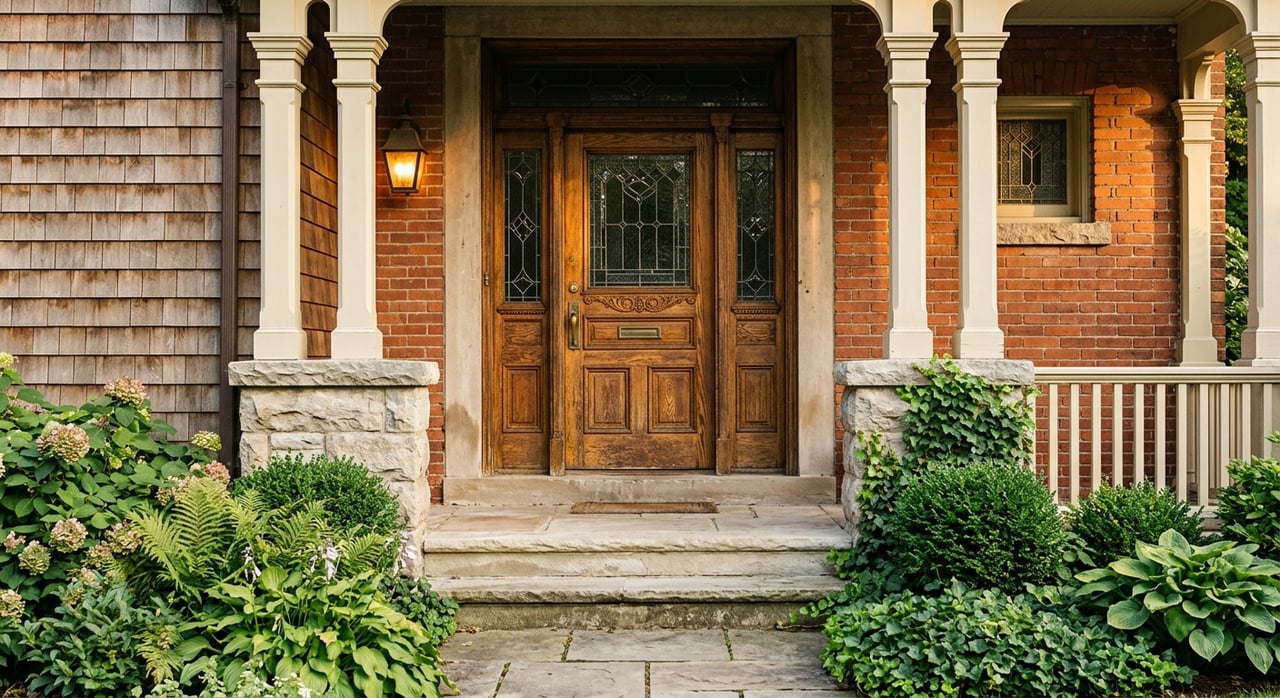
Riverside Historic Homes Guide for Buyers and Renovators
Cynthia Howe Gajewski May 21, 2026
Cynthia Howe Gajewski May 21, 2026
Thinking about buying a home in Riverside because of its charm, tree-lined streets, and one-of-a-kind architecture? That appeal is real, but so is the responsibility that can come with updating an older home in a nationally recognized historic setting. If you are considering a purchase or planning renovations, it helps to know what makes Riverside different, what changes may need review, and how to plan improvements without losing the character that drew you there in the first place. Let’s dive in.
Riverside is not just an older suburb with attractive homes. It was planned in 1868 by Frederick Law Olmsted and Calvert Vaux as a 1,600-acre suburban community west of Chicago. The Village describes it as one of the region’s first planned communities, with curving streets, generous setbacks, and pastoral parkways that still shape how the village looks and feels today.
That larger setting matters when you buy here. Riverside’s historic identity is tied not only to individual houses, but also to the relationship between homes, lots, streetscapes, and landscape features. The Village and the Riverside Historical Museum describe Riverside as a National Historic Landmark, and the Preservation Commission works to protect the significance of the Riverside Landscape Architectural District.
You can also see that character in the architecture. The Village notes that Riverside includes work by architects such as Frank Lloyd Wright and William LeBaron Jenney. Even when a home is not architect-designed, the overall visual rhythm of the neighborhood is part of what makes Riverside special.
Before you fall in love with a renovation plan, confirm whether the property is a local historic landmark. Riverside tells owners to contact the Village Planner or check Appendix D of the Preservation Ordinance in the Municipal Code. This is an important first step because local landmark status can affect what exterior changes require preservation review.
You will also want to separate two different processes: preservation review and building permits. They often overlap, but they are not the same thing. Knowing which approvals apply can help you avoid delays, budget surprises, and last-minute redesigns.
A smart early checklist includes:
If a property is a local historic landmark, Riverside requires a Certificate of Appropriateness, often called a COA, for exterior work that also requires a building permit. According to the Village, that can include roof repair or replacement, tuckpointing, window repair or replacement, and additions.
Some projects do not need preservation approval. Riverside states that painting and interior work do not require additional preservation approval, though larger projects may still need standard building permits or code-related approvals. That distinction can make a big difference if you are planning updates soon after closing.
For buyers, this means you should not assume an exterior project is simple just because it looks routine. In a historic landmark context, replacing windows or changing porch details may involve review even when the work seems straightforward.
Riverside’s permit rules are broader than historic review rules. The Village says permits are required for construction, alterations, or repairs costing more than $500, as well as any electrical or plumbing work. That matters in older homes, where even modest renovations can quickly involve system updates.
The Village also lists common permit items that often come up in older houses, including:
If you are budgeting for a Riverside purchase, it is wise to leave room for both visible upgrades and behind-the-walls work. Older homes often need a mix of both.
A good Riverside renovation does not mean freezing a house in time. It means understanding which features carry historic character and making thoughtful choices about what to preserve, repair, or update. Riverside’s Preservation Commission uses the Secretary of the Interior’s Standards for Rehabilitation, which emphasize repair and retention before replacement.
That repair-first mindset is especially important with original details. Historic windows are a common example. National Park Service guidance says repair should be the first option considered, and if replacement is necessary, the new window should match the old in design, color, texture, and, where possible, materials.
This approach can help you protect value in two ways. First, it supports the visual integrity of the home and streetscape. Second, it can keep your project more aligned with local review expectations.
Riverside’s review criteria focus on how a project fits the home and the surrounding area. The Village considers whether proposed work enhances exterior features, harmonizes with neighboring properties, preserves architectural and historical integrity, avoids changing the essential character of the area, and remains visible from the public right-of-way during all seasons.
That last point is worth pausing on. Features that are easy to overlook in summer may become much more visible in winter. If your renovation changes windows, trim, roofing, dormers, porches, siding, gutters, doors, or accessory structures, visibility from the street may be part of the review.
The Village also expects detailed application materials. Depending on the project, owners may need street-view photos, descriptions of materials, product literature, color charts, samples, and drawings or sections. In practical terms, well-prepared plans often make the process smoother.
Many buyers want more space, but historic homes do not always fit modern living needs as-is. The good news is that additions do not have to look exactly like the original house. National Park Service guidance says additions should be compatible with the building’s massing, size, scale, and architectural features, while still being clearly differentiated so the original structure remains identifiable.
In many cases, the best location for an addition is at the rear or on an inconspicuous side. That can help preserve the historic street-facing appearance of the home. It can also reduce the visual impact on the broader streetscape.
Landscape features matter too. Guidance emphasizes preserving vegetation, grading, walls, fences, walkways, and driveways where possible. In Riverside, that is especially relevant because the landscape is part of the historic environment, not just the house itself.
In a place like Riverside, renovation decisions often come down to details. A roofline, porch element, window pattern, or trim profile can shape how the whole house reads from the street. That is why projects that seem cosmetic can still have a big impact on character.
There is also a Riverside-specific point that surprises some buyers: the Village does not regulate home paint color. Painting does not require preservation approval. The Village does, however, caution owners not to pressure-wash wood before painting.
That kind of local knowledge can help you plan smartly. It may allow you to refresh a home’s appearance without stepping into a more complex approval process.
One of the best ways to reduce stress is to bring in the right people early. National Park Service guidance recommends consulting preservation professionals at the beginning of a project, and Riverside offers pre-application meetings to help owners sort out scope before plans and materials are finalized.
That can be especially helpful if you are still deciding between repair and replacement, or if you are unsure how visible a change will be from the street. A short early conversation can save time later.
It also helps to work with licensed contractors. Riverside requires contractors working in the Village to be licensed. For tree work on private property, the Village’s forestry guidance strongly encourages using a certified arborist, which makes sense in a community where the tree canopy and parkways are part of the historic setting.
If your project needs a COA, timing matters. Riverside says owners should submit a COA application to Community Development at least 10 days before the regular Preservation Commission meeting. In-kind repairs or replacements may be reviewed within 7 days.
That timeline can influence your buying strategy and move-in plans. If you hope to start exterior work right after closing, it is smart to ask questions before you buy, especially if the home may be a local landmark.
A practical buyer mindset is simple: assume historic-home projects need more homework. Not necessarily more hassle, just more planning.
If you are buying in Riverside, try to look at renovation potential through two lenses at once. First, ask what you want the house to do for your daily life. Second, ask how those changes interact with the home’s visible historic character and the surrounding landscape.
The most successful plans usually start with the basics:
This approach protects more than compliance. It helps you make changes that feel right for the home, the block, and your long-term investment.
Buying and renovating in Riverside can be incredibly rewarding when you go in with a clear plan and the right guidance. If you want help evaluating a Riverside home, thinking through renovation tradeoffs, or matching your wish list with the realities of a historic property, Cynthia Gajewski is here to help.
We are your local housing match-makers. With a shared passion for Oak Park’s historic architecture and diverse neighborhoods, we thrive on connecting the right people with the right homes. Connect with us for a team that treats your goals with optimism, energy, and unwavering dedication.
109 N MARION ST OAK PARK, IL 60301