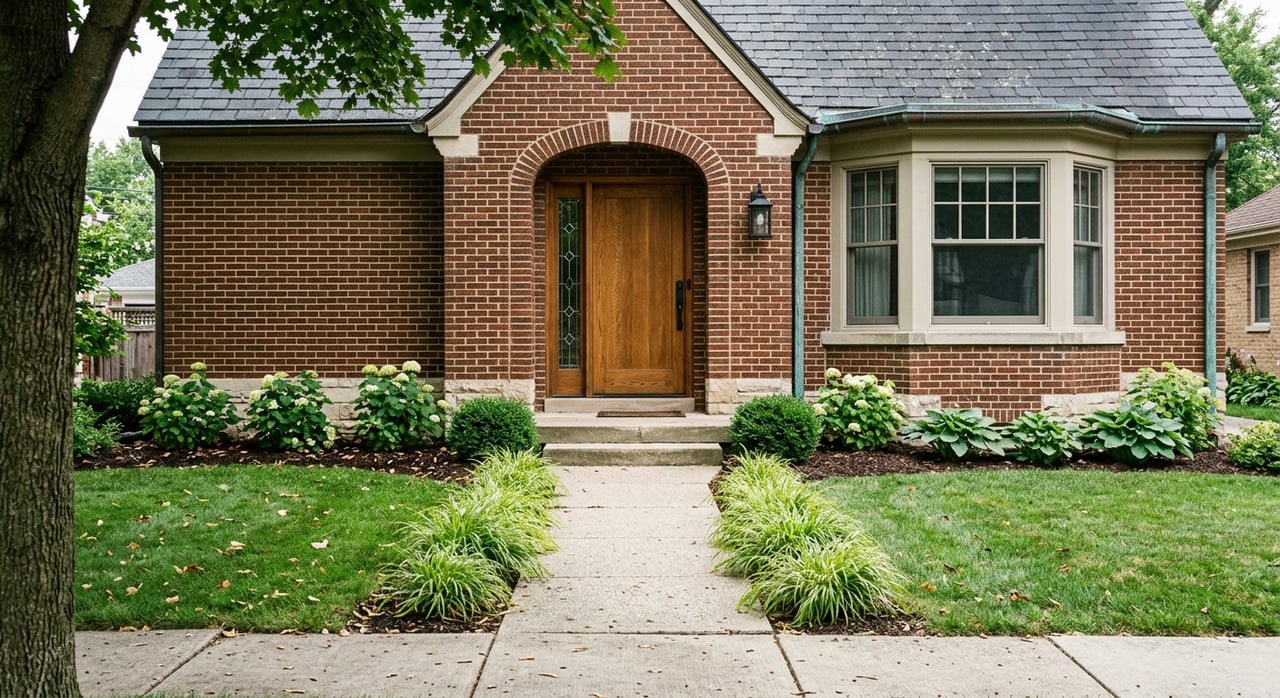
First-Time Homebuyer Guide for Forest Park
July 16, 2026
July 16, 2026
Buying your first home in Forest Park can feel exciting one minute and overwhelming the next. You may be wondering how much cash you really need, whether a condo or house makes more sense, and what local steps could affect your timeline. The good news is that once you understand how the Forest Park market and Illinois buying process work, the path gets much clearer. Let’s dive in.
Forest Park gives first-time buyers more than one path into homeownership. The housing mix includes single-family homes, condos, small multi-unit buildings, and larger condo or apartment-style buildings, which means you can compare lifestyle as much as price.
That variety matters when you are just starting out. CMAP's 2023 profile shows 7,777 housing units in Forest Park, with 53.6% of occupied households owner-occupied. The same profile shows a balanced mix of housing types, including single-family homes, 2-to-4-unit buildings, and larger multifamily buildings.
DePaul's 2024 parcel-level data tells a similar story. It shows a mix of single-family, condominium, small multifamily, and 5+ unit properties, which helps explain why first-time buyers here often start with one big question: Do you want lower-maintenance condo living or the flexibility of a house?
Forest Park remains active and fairly competitive. Redfin's market snapshot for the three months ending May 2026 puts the median sale price at $346,293, with homes selling in about 43 days and receiving about 3 offers on average.
For you, that means preparation matters. A solid preapproval, quick decision-making, and a clear sense of your must-haves can help you compete without feeling rushed into the wrong fit.
It also means you should expect some homes to move faster than others. Well-priced properties in good condition may attract multiple offers, while homes that need updates may offer more room to negotiate if you are prepared for the work.
One of Forest Park's biggest strengths is also one of its biggest buying considerations: much of the housing stock is older. CMAP reports a median year built of 1949, and 47.6% of units were built in 1939 or earlier.
That does not mean older homes are a bad choice. It means your budget should account for more than the purchase price. In a community with older housing, condition, maintenance history, and likely future repairs deserve just as much attention as square footage or finishes.
This is especially important if you are comparing a vintage condo, a bungalow, or a small multi-unit property. Roof age, moisture issues, windows, masonry, electrical systems, and big-ticket building components can all affect your true monthly cost over time.
For many first-time buyers, this is the decision that shapes the whole search. Forest Park has enough condos and single-family homes that either option can be realistic, depending on your budget and lifestyle.
A condo may be a good fit if you want:
If you go the condo route, Fannie Mae advises buyers to review key association details carefully. That includes HOA dues, reserve funds, special assessments, insurance, the master policy, and the remaining useful life of major building components.
You also may have only a limited time to review condo documents after your offer is accepted. That makes early planning important, especially if monthly dues or future building expenses could affect your budget.
A single-family home may be a better fit if you want:
The tradeoff is that you will likely carry more direct maintenance responsibility. In Forest Park's older housing stock, that can mean budgeting for repairs sooner rather than later.
Your down payment is only one part of the picture. First-time buyers in Forest Park should also plan for earnest money, inspection costs, closing costs, prepaid items, escrow deposits, and, if you buy a condo, ongoing HOA dues or possible special assessments.
The Closing Disclosure is one of the best tools for understanding your final numbers. Buyers receive it at least three business days before closing, and it shows final loan terms, projected monthly payment, closing costs, escrow items, and cash to close.
If your down payment is under 20%, mortgage insurance may also be part of your monthly payment. Depending on the property, your monthly housing cost may also include property taxes, homeowners insurance, and sometimes condo or HOA assessments.
If cash to close is your biggest hurdle, statewide assistance may help. IHDA's Access Home program currently offers up to 6% of the purchase price, capped at $15,000, as an interest-free deferred loan for down payment and closing costs.
IHDA says borrowers need a minimum 640 credit score, must contribute $1,000 or 1% of the purchase price, must occupy the home as a primary residence, and must complete homeownership counseling before closing. All Illinois counties are eligible.
For a Forest Park buyer, that can be especially useful if you are balancing your down payment with inspection-related repairs, closing costs, or condo-related expenses. FHA loans are also commonly used by first-time buyers as a lower-down-payment option.
Illinois has a buying process that often feels a little different from other states. In general, the sequence is preapproval, offer, inspection, title review, and closing.
Before you shop seriously, get preapproved so you know your price range and can write a stronger offer. In a market where some homes receive multiple offers, this step helps you move with confidence.
In Illinois, the offer or contract typically addresses important items such as earnest money, closing date, possession date, tax prorations, inspection rights, financing contingencies, and attorney approval or modification.
These details matter just as much as price. The right structure can protect you while keeping your offer competitive.
Once you are under contract, schedule the inspection as soon as possible. If the contract is contingent on satisfactory inspection, you may be able to cancel without penalty if you are not satisfied.
In Forest Park, this step deserves real attention. Illinois disclosures commonly flag basement or crawl-space leakage, flooding, and roof, ceiling, or chimney defects, and the village compliance inspection is not a substitute for your own home inspection.
Illinois practice commonly includes an attorney approval contingency. The Illinois State Bar Association recommends giving the attorney several business days to review or modify the offer.
Your attorney can also review title, survey, repair issues, tax prorations, and closing figures. This step is a standard part of many Illinois transactions and adds an extra layer of review before you get to the closing table.
In most Illinois communities, it is common for the seller to provide an owner's title insurance policy. Your attorney should also verify tax prorations and closing figures.
In Cook County, property-tax prorations and escrow are a key part of the closing conversation. The county treasurer says buyers and lenders usually set up an escrow account for property taxes at closing, and sellers typically give buyers credit for taxes that have not yet been billed.
Your Closing Disclosure is the last major checkpoint before signing. Review the loan terms, monthly payment, closing costs, escrow items, and cash to close carefully so there are no surprises.
Forest Park adds a local layer that first-time buyers should understand early. The village says Forest Park does not have a transfer tax, but sellers still need a certificate of compliance through the Department of Public Health and Safety.
That certificate must be based on an inspection made within four months of the contract. Just as important, the village does not guarantee that the property is free of mechanical, electrical, or structural defects, which is why your own inspection still matters.
There are also timing details that can affect closing. The village requires a final water meter reading to be scheduled at least five business days before closing, though condos are excluded from that step.
To receive the transfer stamp, the seller must pay the final water bill and any village fines or fees and submit the certificate of compliance, PTAX-203, and deed. These local steps run alongside the lender, title, and attorney process, so good coordination can help avoid delays.
In a place like Forest Park, local guidance is often less about dramatic predictions and more about practical decisions. You want help matching your budget to the right property type, spotting where an older home may need closer review, and keeping the transaction timeline organized.
That is especially true when you are balancing condo documents, inspection findings, attorney review, lender requirements, and village closing steps all at once. A steady, local guide can help you stay focused on what matters most: buying a home you can feel good about after closing, not just on closing day.
Before you start touring homes, keep these priorities in mind:
Buying your first home in Forest Park is not about knowing everything on day one. It is about making one informed decision at a time, with the right expectations and the right support.
If you are thinking about buying in Forest Park and want calm, local guidance on condos, older homes, and the Illinois process, Cynthia Gajewski is here to help you make a confident move.
We are your local housing match-makers. With a shared passion for Oak Park’s historic architecture and diverse neighborhoods, we thrive on connecting the right people with the right homes. Connect with us for a team that treats your goals with optimism, energy, and unwavering dedication.
109 N MARION ST OAK PARK, IL 60301