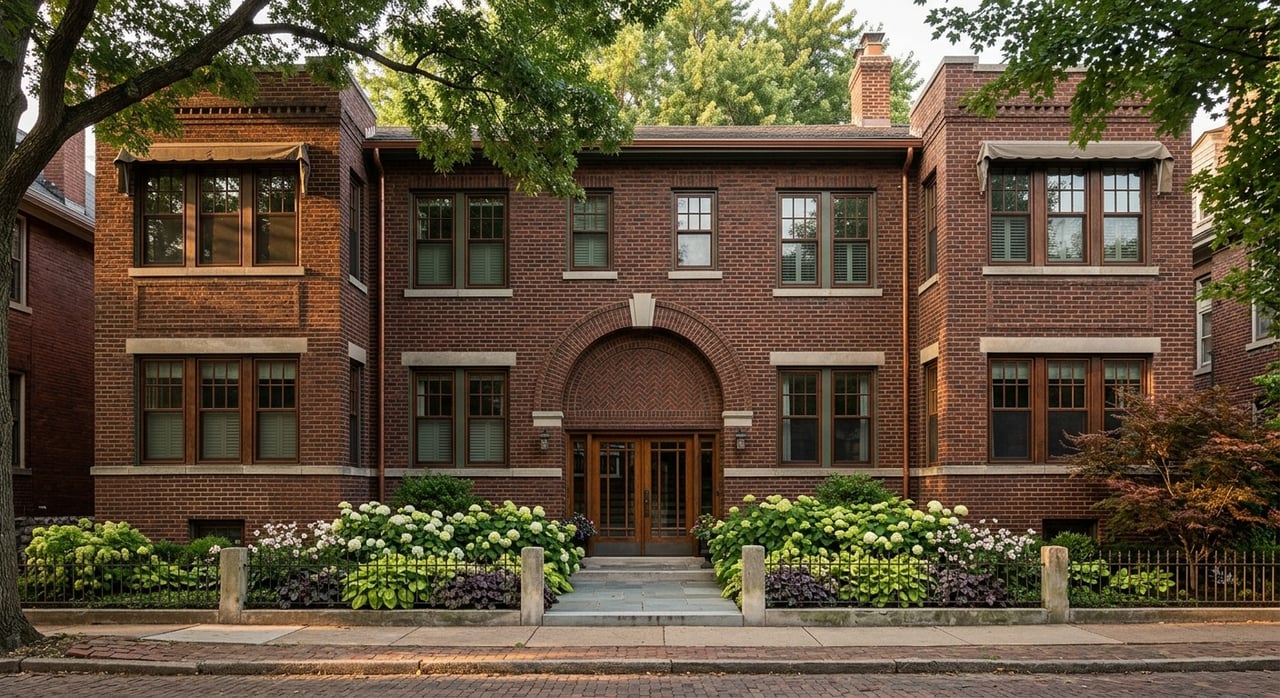
Forest Park vs. Oak Park Homes: A Practical Comparison
April 23, 2026
April 23, 2026
Trying to choose between Forest Park and Oak Park? If you want quick access to Chicago, walkable business districts, and older homes with character, both communities can make a strong case. The challenge is figuring out which one fits your budget, your housing goals, and your day-to-day routine. This guide will help you compare the two in plain English so you can narrow your search with more confidence. Let’s dive in.
Forest Park and Oak Park sit next to each other, but they offer different buying experiences. Forest Park is smaller and generally comes in at a lower price point, while Oak Park is larger and tends to offer a broader mix of amenities and more architecturally significant homes.
Recent market data in the research report places the median sale price at $265,000 in Forest Park and $340,000 in Oak Park. The same report notes typical home values of $272,765 in Forest Park and $434,439 in Oak Park, based on the sources cited there. Homes have also been moving on fairly similar timelines, with averages of about 42 days on market in Forest Park and 46 days in Oak Park according to the village market snapshot.
If budget is one of your biggest decision factors, Forest Park may be the easier place to start. Based on the research report, it generally offers a lower entry point than Oak Park, which can matter a lot for first-time buyers, downsizers, or anyone trying to balance monthly costs with location.
Oak Park may still be the right fit if you are willing to pay more for a larger community, a deeper amenity network, or a home with notable architectural history. The key is not deciding that one place is "better." It is deciding which tradeoffs work best for you.
You may want to focus on Forest Park if you are looking for:
You may want to focus on Oak Park if you are looking for:
One of the biggest differences between Forest Park and Oak Park is the feel of the housing stock. In Forest Park, the village comprehensive plan describes older single-family neighborhoods along with apartments, condominiums, townhomes, flats, and coach homes. It also notes that more than 400 housing units were built before 1940, with mid-rise multi-family buildings more common in the north end and two- to three-story multi-family buildings more common in the south end, according to the Forest Park Comprehensive Plan.
Oak Park is more widely known for its historic architecture. The village highlights styles such as Queen Anne, Prairie School, and Colonial Revival, along with a large number of landmarked and historically recognized properties, according to Oak Park’s historic preservation information.
For you as a buyer, that difference can shape the entire search process. Forest Park may feel more straightforward if you want an older home or condo without as much emphasis on architectural designation. Oak Park may be especially appealing if you value historic character and want access to a deeper inventory of architecturally significant homes.
If you are considering Oak Park, it is important to understand that historic preservation can affect what happens after you buy. The village states that the Historic Preservation Commission reviews permit applications for exterior alterations, additions, new construction, and demolition involving landmarks and properties in historic districts.
That does not mean buying in Oak Park is difficult. It does mean you should go in with clear expectations if you are looking at an older or historically designated property. This is one area where local guidance can make a big difference, especially if you are weighing charm, renovation plans, and long-term maintenance.
Your daily routine matters just as much as the house itself. Where you grab coffee, meet friends for dinner, run errands, or spend a weekend afternoon can shape how a place feels once you move in.
Forest Park’s main business district centers on Madison Street. The village describes the community as having an urban-suburban feel and points to Madison Street for dining and entertainment, while also highlighting local parks and the aquatic center on its community page.
Oak Park offers more than one commercial hub. The village identifies Downtown Oak Park, the Hemingway District, and the Oak Park Arts District as distinct business areas, each with its own mix of restaurants, services, shops, and transit access on the village’s shopping, dining, and entertainment page.
Forest Park may feel like a better fit if you want a compact, neighborhood-scale setup where much of the activity is centered around one main street. Oak Park may feel stronger if you want more variety in where you spend your time and more than one walkable destination area.
Neither approach is right for everyone. Some buyers love the simplicity of a smaller village. Others want several business districts that give them more options throughout the week.
Both Forest Park and Oak Park are strong choices if transit matters to you. That is one reason these communities attract buyers who want convenient access to downtown Chicago and other parts of the region.
Forest Park has especially notable rail access for a smaller village. According to CTA, the Blue Line provides 24-hour service between O'Hare and the Forest Park terminal via downtown Chicago, and the Green Line also runs from Forest Park through the Loop. CTA also notes connections at the Harlem/Lake station and park-and-ride service at the Forest Park terminal on the Blue Line service page.
Oak Park also has a strong transit network. The village states that the Blue Line, Green Line, CTA buses, Pace, and Metra UP-W all serve the community through its transportation page.
If you want a village that functions as a terminal point for CTA service, Forest Park stands out. If you want the broadest overall transit mix within one community, Oak Park may have the edge because it combines two CTA lines with Metra service.
For many buyers, this comes down to your actual routine. Do you need a straightforward downtown commute? Do you travel often and care about the Blue Line’s O'Hare connection? Do you want flexibility across CTA and Metra? Those answers can point you in the right direction quickly.
There is no one-size-fits-all answer, but Forest Park often gets early attention from first-time buyers because of its lower general price point in the research report. If your goal is to get into the market, stay near transit, and keep your search focused, Forest Park may offer more approachable options.
Oak Park can still work well for first-time buyers, especially if you are open to condos or specific price bands within the village. But if you are comparing the two strictly through the lens of affordability, Forest Park may give you more room to work with.
Both communities offer more than detached homes, but the type of variety differs. Forest Park’s planning documents point to a practical mix of single-family homes, apartments, condos, townhomes, flats, and coach homes.
Oak Park’s variety often shows up through architectural depth and neighborhood character. If the design of the home matters as much to you as square footage or bedroom count, Oak Park may feel more compelling. If you want a clearer, more straightforward mix of options, Forest Park may feel easier to navigate.
A simple way to compare these two communities is to rank your top priorities before you tour homes. Try using a short checklist like this:
Once you know your top three priorities, the decision usually becomes clearer. In many cases, buyers are not choosing between two equal options. They are choosing which community best supports the way they want to live.
Forest Park and Oak Park each offer strong advantages, and the better choice depends on what matters most to you. Forest Park often makes sense if you want a smaller community, a lower price point, and strong transit access. Oak Park often rises to the top if you want historic architecture, multiple business districts, and a broader amenity network.
If you want help comparing homes, price points, or older housing stock in either community, Cynthia Gajewski can help you sort through the tradeoffs and find the right match for your goals.
We are your local housing match-makers. With a shared passion for Oak Park’s historic architecture and diverse neighborhoods, we thrive on connecting the right people with the right homes. Connect with us for a team that treats your goals with optimism, energy, and unwavering dedication.
109 N MARION ST OAK PARK, IL 60301