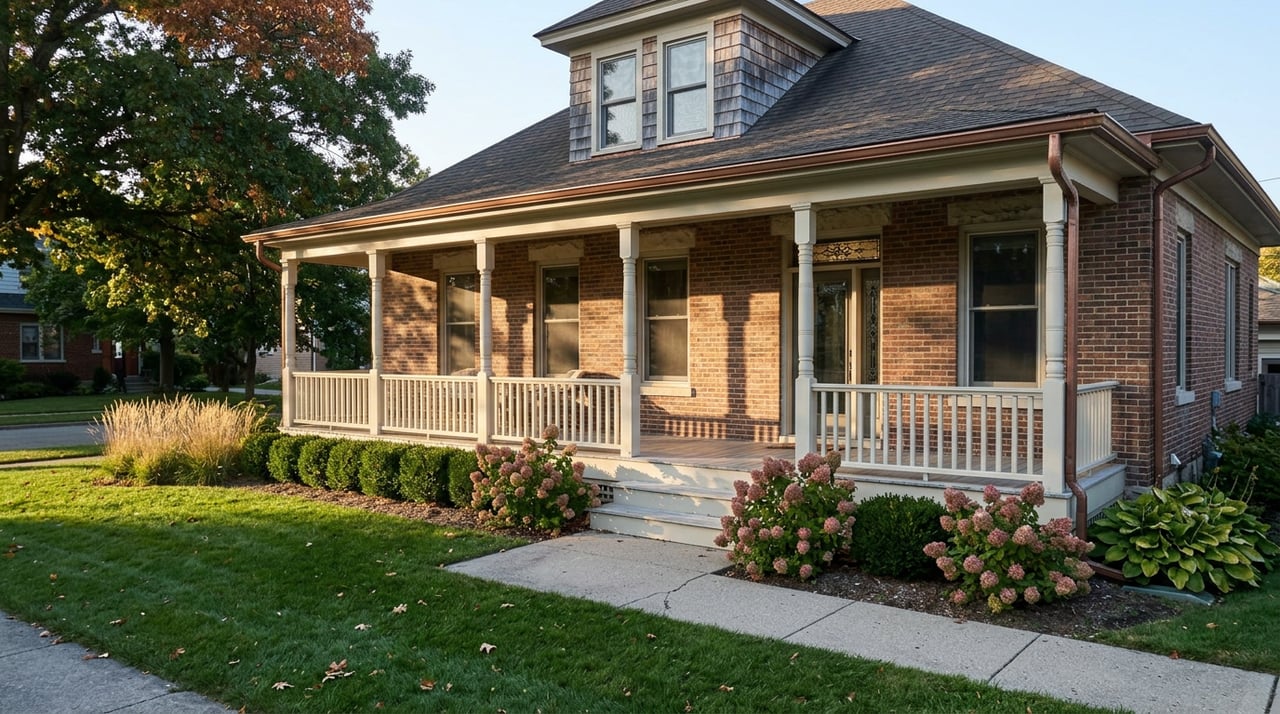
Oak Park's Fall Market Looks Like Every Suburb's. The Inventory Numbers Say It Isn't.
September 17, 2026
September 17, 2026
By June, Realtor Scott Berg of Berg Properties was fielding a strange question from buyers who'd spent the spring getting outbid. They wanted to know if the 2026 market was over, and whether they should pause their search until 2027. It's the kind of question that only makes sense if you believe a familiar rule: spring is competitive, fall cools off, and patient buyers get rewarded for waiting.
That rule is true in a lot of places this year. It is not true in Oak Park.
Monica Dalton of the Dalton Collective at Compass has been watching the list-to-sales ratio in Oak Park hover around 105 percent for months, meaning homes are routinely closing above asking. Her read on where that number goes this fall isn't the discount buyers are hoping for. She expects it might ease to 100 percent, maybe a touch above.
That's not a soft market. That's a market where the asking price is still the floor, not the ceiling.
Dalton's advice to sellers reflects the same math from the other direction: fall isn't the time to expect a bargain-hunting buyer pool, and pricing a home at what comparable properties have actually sold for is still the fastest way to sell it.
Here's where it gets specific enough to matter. A comparison of six western suburbs, drawn from Midwest Real Estate Data and covering the twelve months ending April 2026, found that Oak Park wasn't just tight. It was moving in the opposite direction from several of its peers:
Two suburbs with meaningfully higher price points, Naperville and Hinsdale, are seeing more room open up for buyers this year. Oak Park is seeing less. If you're comparing Oak Park to a neighboring community based on national fall-market assumptions, you're comparing it to a pattern it isn't actually following.
The mechanism behind that divergence is simpler than it sounds. Active listings in Oak Park dropped 14.8 percent over the same twelve-month period, but new listings coming onto the market fell only 2.9 percent. That gap is the whole story: homes are being absorbed by buyers faster than sellers are replacing them.
In a market where new supply keeps pace with demand, a slower fall genuinely means more selection and softer competition. In a market where demand is eating through existing inventory faster than new listings can refill it, a slower fall just means fewer transactions at the same tight ratio, not friendlier ones.
Not every corner of the Oak Park market is behaving this way, and that's useful if you're flexible on housing type. Single-family homes have been selling in an average of 28 days on a trailing 12-month basis as of May 2026, down more than 22 percent from a year earlier. Condos and townhomes in the same window were taking closer to 46 days, up over 12 percent year over year.
That's a real split. The single-family segment is where the 105 percent list-to-sale ratio and the disappearing inventory live. The condo and townhome segment is actually loosening a little, even as prices there keep climbing (price per square foot was up 9.3 percent over the same period). For a buyer who can go either direction, that's the one place in this market where fall might genuinely buy you more time to think.
If you're comparing Oak Park to another western suburb using a generic seasonal script, the script will mislead you in a specific way: it will tell you to wait, and waiting here doesn't cost the seller much. Well-priced, well-presented single-family listings are still moving in under a month, and multiple offers within the first weekend are common enough that agents describe it as the norm, not the exception.
For sellers thinking about timing, Dalton's advice points a different direction than the discount narrative might suggest. Rather than racing to list before a fall cooldown that isn't likely to arrive, she counsels using the fall and holiday months to prepare a home properly, so it's ready to compete when the spring pool of buyers returns in force.
For buyers, the practical takeaway is to treat Oak Park's single-family segment as a market where patience buys you less leverage than it would in Naperville or Hinsdale right now, and to seriously weigh whether a condo or townhome gets you into the neighborhood on friendlier terms while you wait for a single-family opportunity that fits.
If inventory is this tight, will fall bring any price relief at all? Some, but not much. The expectation from agents actively working the market is a list-to-sales ratio easing from around 105 percent toward 100 percent, not a drop below it. A home priced at what similar properties have recently sold for is still expected to sell at that price, not below it.
What if I'm deciding between a single-family home and a condo in Oak Park right now? This is the one place the seasonal calendar actually works in a buyer's favor. Condos and townhomes are taking longer to sell than they were a year ago, even as the single-family segment tightens further. If your search criteria can flex toward attached housing, you're operating in a materially different market than someone competing for a bungalow or foursquare.
Every one of these numbers describes a moment, not a permanent condition. Inventory patterns shift, and the gap between Oak Park and its neighboring suburbs won't necessarily hold the same shape next spring. What won't change is the value of having someone who's watching these numbers month to month, not just checking a portal median once and calling it research.
If you're weighing a move into Oak Park or River Forest and want a clearer read on what's actually happening street by street, Team Cynthia is happy to walk through it with you. Let's find your perfect home together.
We are your local housing match-makers. With a shared passion for Oak Park’s historic architecture and diverse neighborhoods, we thrive on connecting the right people with the right homes. Connect with us for a team that treats your goals with optimism, energy, and unwavering dedication.
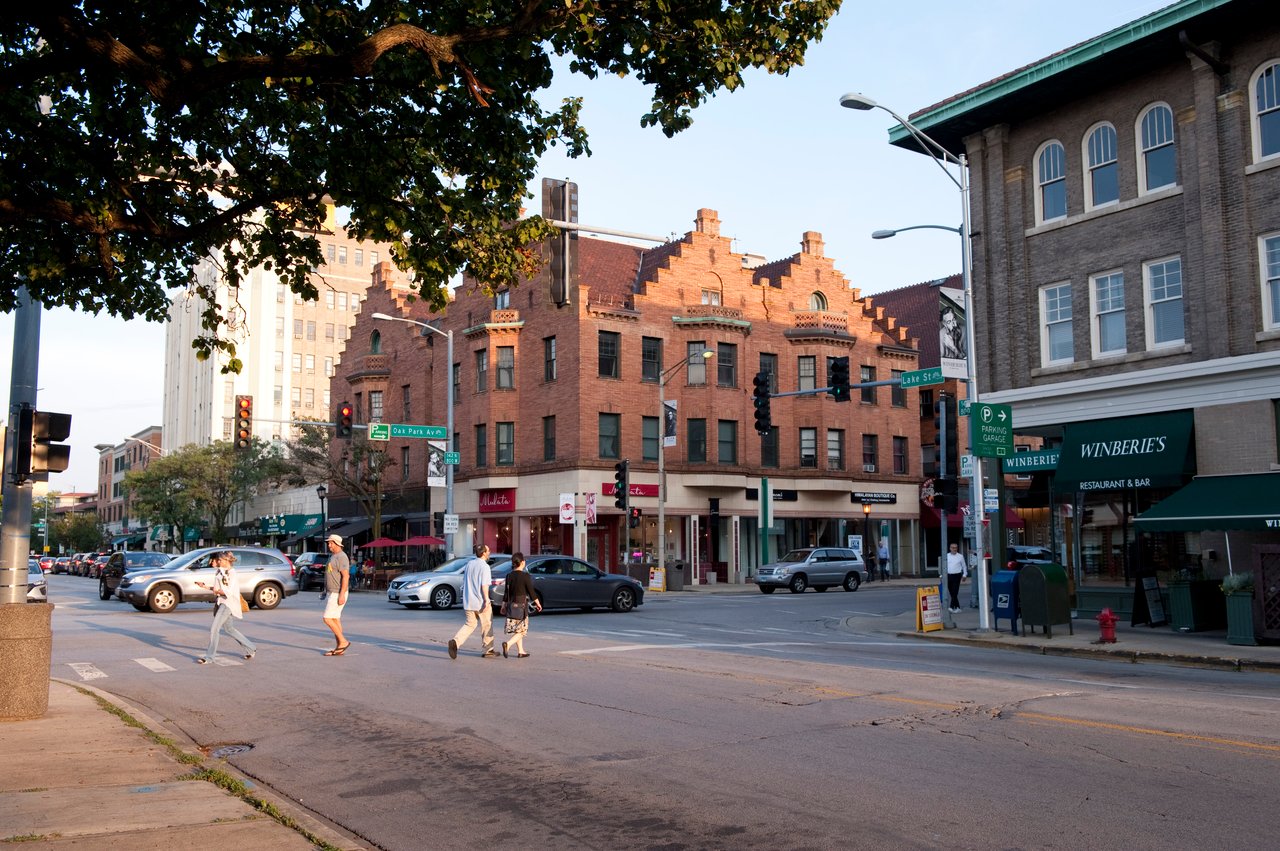
109 N MARION ST OAK PARK, IL 60301