Preparing Your Riverside Home For A Low-Stress Sale
May 14, 2026
May 14, 2026
Wondering how to get your Riverside home ready to sell without turning the process into a full renovation project? You are not alone. If your home has character, history, or carefully maintained original details, it can be hard to know what to update, what to leave alone, and how to avoid last-minute stress. The good news is that a low-stress sale usually comes from smart preparation, not over-improving. In Riverside, that often means cleaning, simplifying, repairing what buyers will notice, and showcasing the setting that makes the village so distinctive. Let’s dive in.
Riverside is not a one-size-fits-all market. The village describes itself as one of the first planned communities in the United States, with curving streets, generous setbacks, and parkways shaped by grouped trees and open lawn. It also highlights its architectural legacy and its status as a National Historic Landmark District and an accredited arboretum.
That matters when you sell. In Riverside, buyers are often responding to more than square footage or finishes. They are also noticing how your home fits into the landscape, how the exterior presents from the street, and whether original details feel cared for rather than covered up.
A low-stress sale usually begins with the idea that less can be more. Instead of planning a long list of upgrades, focus on the things that help buyers see your home clearly and feel confident walking through it.
According to consumer guidance and staging research cited in the research report, the most common seller prep recommendations include decluttering, cleaning, and improving curb appeal. In a place like Riverside, those basics often make a stronger impression than cosmetic projects that fight the home’s original style.
Think about your home the way a buyer will. The walk up to the front door, the condition of the entry, the windows, the lighting, and the overall sense of care all shape the first impression.
A smart prep plan often includes:
These steps are practical, manageable, and usually easier to schedule than larger construction work.
In many markets, curb appeal matters. In Riverside, it carries even more weight because the village setting is part of the appeal. Tree-lined streets, landscaped parkways, and historic character create a strong visual context before a buyer ever walks inside.
That means your goal is not to reinvent the yard. Your goal is to make the home feel cared for, easy to approach, and in harmony with its setting.
Start with the route a buyer sees and uses most. Make sure the front walk is clear, the porch feels welcoming, and the front door area is neat and bright.
Then look at the landscape with fresh eyes. Trim overgrowth, define beds, remove debris, and keep lawn areas tidy. In Riverside, a clean exterior and well-kept entry often do more for perceived value than a string of small indoor updates.
One of the easiest ways to reduce stress is to avoid unnecessary pre-listing projects. Riverside notes that cosmetic work such as painting, carpeting, tile work, refinishing hardwood floors, and sealing driveways generally does not require a permit. By contrast, building and construction projects costing more than $500 generally need a permit.
That is an important line to keep in mind. If a project is not clearly needed to solve a problem, it may not be worth adding time, cost, and complexity before your home hits the market.
If your home is a local landmark, exterior work that requires a building permit may also require a Certificate of Appropriateness from the Preservation Commission. Riverside specifically notes that this can include work such as roof repair or replacement, tuckpointing, window repair or replacement, and additions.
The village also says that no additional approval is required for painting or interior work, and it does not regulate home paint color. It further cautions landmark owners against pressure washing wood before painting. If you are considering exterior work, it is wise to confirm the requirements early so you are not surprised during your prep timeline.
Not every flaw needs to be fixed before listing. But some issues can create concern, affect negotiations, or lead to avoidable delays once a buyer is under contract.
The research report notes that sellers may choose a pre-sale inspection to identify issues before buyers do. It also recommends getting estimates for major items such as the roof, HVAC, or appliances so you understand what a buyer may factor into their offer or repair request.
You do not need a perfect house to sell successfully. You do need to understand the condition of the home well enough to make informed decisions.
If something major is aging or visibly worn, getting an estimate now can help you choose between fixing it, pricing around it, or being ready for the conversation later. That kind of preparation can lower stress because you are making decisions from a place of clarity, not reacting under pressure.
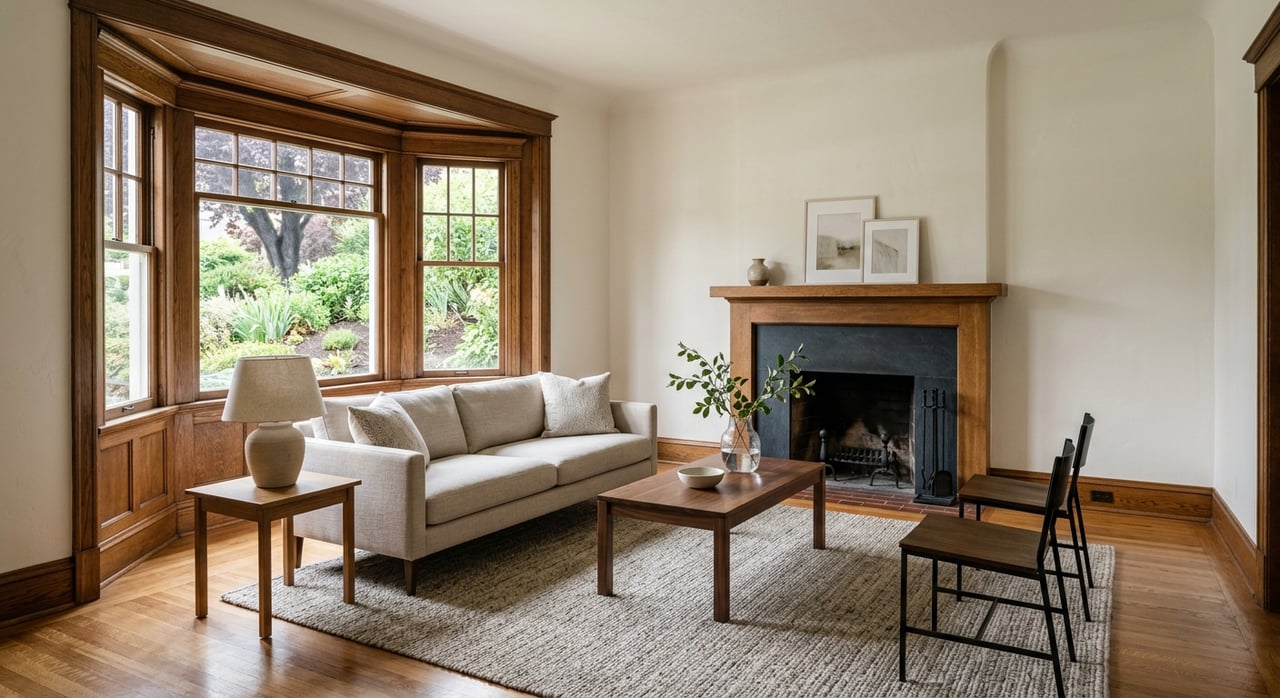
Riverside homes often have details worth showing off. Original millwork, staircases, windows, built-ins, and room proportions can all get lost when rooms feel crowded or visually busy.
That is why decluttering is more than a cleaning task. It is one of the most effective ways to let the architecture speak.
The staging data in the research report found that staging helps buyers visualize a property as a future home. The most commonly staged spaces were the living room, primary bedroom, dining room, and kitchen.
For Riverside homes, keep styling simple and supportive. Remove distractions, pare back bulky furniture, and use each room in a clear, easy-to-read way. The goal is not to make the home feel generic. It is to make the scale, light, and details feel easy to appreciate.
Today, many buyers first encounter your home online. The research report notes that 43% of buyers first started their search online, and 51% found the home they bought through the internet. Listing photos, physical staging, videos, and virtual tours were also ranked as highly important.
That makes photography one of the most important parts of your prep plan, especially in a visually distinctive village like Riverside.
The guidance in the research report is clear that cameras amplify clutter and grime. Before photo day, open blinds for natural light, clear distracting surfaces, remove refrigerator magnets, edit down wall decor where needed, and make sure each room looks clean and intentional.
This matters because online expectations carry into showings. If buyers love the photos, they will expect the in-person home to match what they saw.
A strong Riverside listing often benefits from exterior photos that capture the front entry, the home’s relationship to the street, and the surrounding tree-lined setting. In this market, the sense of place can be part of what draws buyers in.
When the outside is prepared with the same care as the inside, your listing can tell a more complete story from the very first image.
A low-stress sale is not only about presentation. It is also about paperwork and timing.
Riverside states that an inspection is not required for transfer, but the village does require property-transfer paperwork and a final water reading completed remotely no more than 10 days before closing. Homeowners can also request a water-line material check, and if there is a full or partial lead service line, the Certificate of Compliance will include a notice.
This is one of the simplest ways to avoid last-minute scrambling. As you prepare your home, start collecting manuals, warranties, permit history, utility information, and any village-related transfer paperwork.
Even if your home is beautifully staged, missing records can still create stress later. A well-organized seller is often a calmer seller.
If you are hoping for a smooth sale, it helps to think of preparation as a sequence. Do the outside first, simplify room by room, clean deeply, address the repairs that matter most, and schedule photos only when the house is truly ready.
That approach tends to protect your time and energy. It also helps you avoid spending money in the wrong places.
Here is a practical way to structure your next steps:
Selling a home in Riverside is rarely just about putting a sign in the yard. It often involves presentation strategy, timing, repair decisions, photography, and local logistics that are easier to manage when someone is coordinating the process.
That is where a full-service, relationship-first approach can make a real difference. Team Cynthia’s work is built around thoughtful guidance, strong visual marketing, and local knowledge of older and architecturally distinctive homes across Oak Park and the near-west suburbs, including Riverside.
With Cynthia’s professional photography background and the team’s experience helping sellers prepare, market, and move through a transaction smoothly, you can build a plan that supports both your home and your timeline. If you are thinking about selling in Riverside and want a calm, strategic place to start, connect with Cynthia Gajewski.
We are your local housing match-makers. With a shared passion for Oak Park’s historic architecture and diverse neighborhoods, we thrive on connecting the right people with the right homes. Connect with us for a team that treats your goals with optimism, energy, and unwavering dedication.
109 N MARION ST OAK PARK, IL 60301