Why Buyers Choose Riverside IL for Village Living
May 28, 2026
May 28, 2026
Looking for a place that feels distinct the moment you arrive? Riverside stands out because it was designed to feel like a village, not just another suburb on a standard grid. If you are drawn to historic character, walkable surroundings, green space, and an easy rail connection to Chicago, Riverside offers a mix that is hard to replicate. Let’s dive in.
Riverside’s village feel is not accidental. It was planned in 1868 and 1869 by Frederick Law Olmsted and Calvert Vaux as a 1,600-acre suburban community west of Chicago.
According to the National Park Service, the original design aimed to reduce urban stress while still preserving rail access to downtown Chicago. The Village of Riverside says many of those original design elements remain in place today, and the community has held National Historic Landmark status since 1970.
One reason Riverside feels different is the layout itself. The village emphasizes curving streets, generous setbacks, pastoral parkways, and open lawns instead of a rigid street grid.
The National Park Service notes that Riverside has no square corners and no cul-de-sacs. For you as a buyer, that can translate into a softer, more scenic streetscape that feels more relaxed and less repetitive.
Riverside was arranged so that open spaces and parkland were part of everyday living, not an afterthought. That idea still shapes how the village looks and feels today.
If you value a setting where the landscape is part of the identity, Riverside makes a strong first impression. It reads as a place where design, greenery, and neighborhood life were meant to work together.
Many buyers notice quickly that Riverside feels green and grounded. The Village of Riverside describes it as a walkable community with a rural setting in the middle of the Chicago region.
That contrast is a big part of the appeal. You can be in a community with established public spaces and regional access while still feeling removed from a more crowded, fast-paced environment.
Riverside’s public realm is layered with parks, open spaces, and riverfront areas. The village parks map includes places such as Centennial Park, Guthrie Park, Blythe Park, Harrington Park, Turtle Park, Indian Gardens, Swan Pond, and the Scout Cabin, along with forest preserve land and trail connections.
The Des Plaines River also plays an important role in the setting. Together, the parks, trails, preserves, and river help create the feeling that nature is woven into the village rather than pushed to the edges.
Riverside’s character is also reinforced by small details that buyers often remember. The village says it still maintains more than 400 gas street lights in the residential portion of the community, which it identifies as one of Riverside’s defining historic features.
Those details support a strong sense of place. If you are searching for a home in a community that feels visually memorable, Riverside offers that in a way many buyers find appealing.
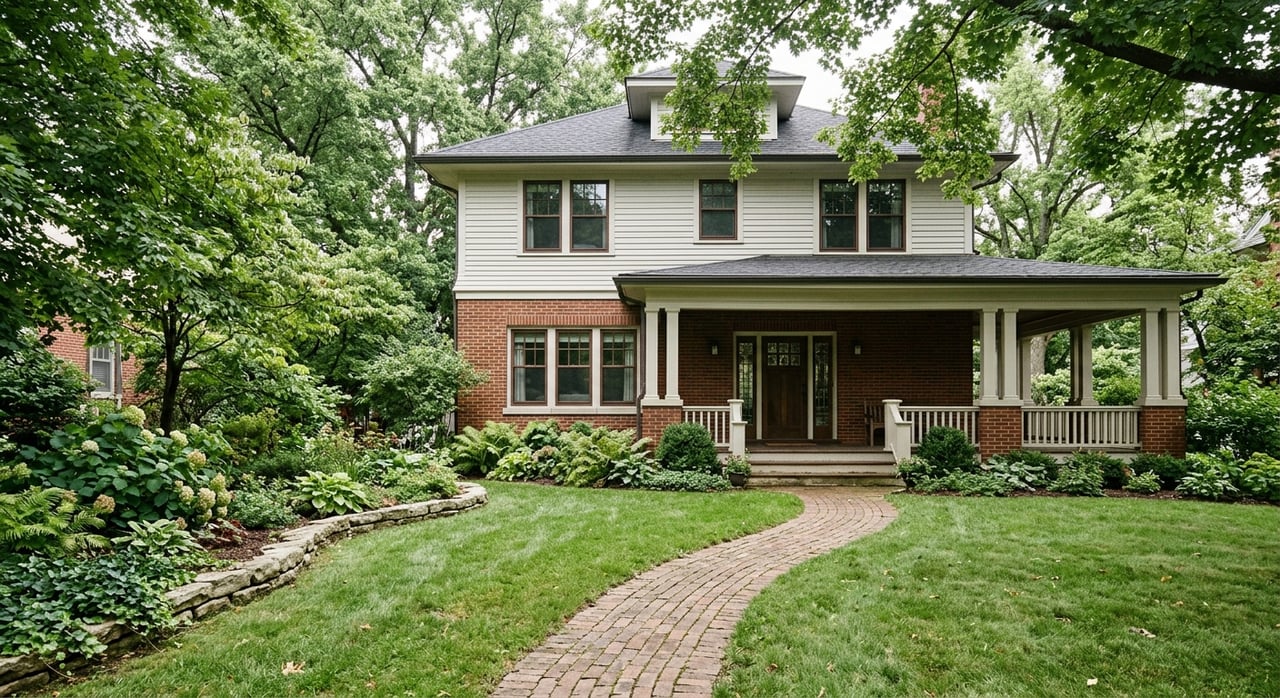
Riverside attracts buyers who want more than one style repeated block after block. The village says its architecture includes work by Frank Lloyd Wright, Louis Sullivan, William Le Baron Jenney, Joseph L. Silsbee, R. Harold Zook, and William Drummond.
It also highlights notable buildings such as the Avery Coonley House and the F.F. Tomek House. That architectural range helps Riverside feel layered, established, and visually interesting.
Riverside’s historic appeal is supported by active local storytelling and preservation. The village offers self-guided, guided, and online historic tours, and the Riverside Historical Museum interprets the community’s landscape and architecture through exhibits and tours.
For buyers, that can signal a place where history is visible and valued. It is one of the reasons Riverside often feels more like a preserved environment than a newer community built all at once.
If you are drawn to older homes, distinctive details, and architectural variety, Riverside may feel like a natural fit. You are not just shopping for square footage here. You are also choosing a setting shaped by design, preservation, and a strong visual identity.
That said, every older or historic home comes with its own condition, updates, and maintenance story. Having local guidance matters when you are comparing charm, function, and future upkeep.
A village feel only works if daily life is practical too. Riverside offers that balance through rail service, a compact footprint, and a clearly defined local business pattern.
Metra’s BNSF line includes a station in Riverside at 90 Bloomingbank Road with accessibility, ticket vending machines, and parking. The line connects to Chicago Union Station, which keeps commuting and city access part of everyday life.
The U.S. Census Bureau reports Riverside had 9,298 residents in the 2020 Census and 1.98 square miles of land area. That relatively compact size can add to the sense that the community feels knowable and connected.
The Census Bureau also reports an 84.8% owner-occupied housing rate, a median owner-occupied home value of $491,400, and a median household income of $153,686 in the 2020 to 2024 estimates. Together, those figures describe a small, mostly owner-occupied community with an established residential base.
Riverside School District 96 says it serves Riverside, the east side of North Riverside, and portions of Brookfield and Lyons. Riverside Brookfield High School District 208 places the high school at 160 Ridgewood Road in Riverside.
For many buyers, school district boundaries are one part of understanding how a community is organized. Riverside’s public school footprint and village scale can reinforce the sense that services and daily routines stay closely tied to the community itself.
Commercial activity in Riverside is concentrated in three business districts, including two Harlem Avenue districts and an Ogden-Harlem district. The village’s shop-local resources also highlight independent restaurants and local businesses.
That setup can appeal to buyers who want local convenience without the feel of endless commercial sprawl. It supports the idea of a community where everyday errands and dining options are present, but the residential identity still leads.
Riverside often resonates with buyers who want a quieter pace, visible history, and easy access to Chicago. Based on the village’s planning, preservation, transit, park, and business resources, it tends to appeal to people who value character and a strong sense of place.
You may be especially drawn to Riverside if you want:
This is usually less about newer subdivision convenience and more about the experience of living in a curated, established environment. For the right buyer, that difference is exactly the point.
In a community like Riverside, the home search is about more than price and bedroom count. You may also be weighing architecture, lot setting, proximity to parks or the train, and the condition of an older home.
That is where neighborhood-specific guidance can make the process feel much clearer. A team that understands near-west suburbs, historic housing stock, and the tradeoffs that come with older homes can help you match the right property to the way you want to live.
Whether you are relocating, buying your first home, or moving to a place with more character and long-term appeal, Riverside rewards a thoughtful search. If you want help exploring Riverside and nearby communities, Cynthia Gajewski is here to help you find the right fit.
We are your local housing match-makers. With a shared passion for Oak Park’s historic architecture and diverse neighborhoods, we thrive on connecting the right people with the right homes. Connect with us for a team that treats your goals with optimism, energy, and unwavering dedication.
109 N MARION ST OAK PARK, IL 60301